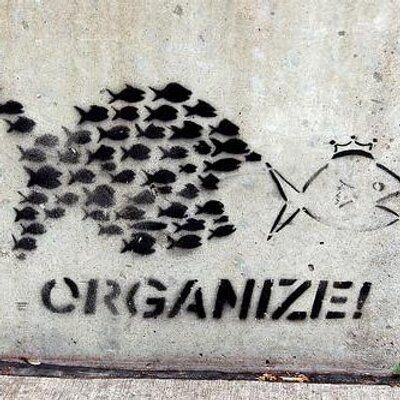
From what we refuse to what we build
This past month, I’ve had trouble writing. Not because there’s nothing to say — there’s too much. But the world accelerates faster than my ability to think, and my response to the vertigo feels either futile (factually, the scale at which we can still act is so micro that I sometimes wonder what’s the point) or excessive (emotionally, the position I take in the text that follows demanded a great deal of courage).
This manifesto starts from a wager: that between individual powerlessness and the scale of the disaster, there exists a space that is still blurry, still fragile — but workable. A space for collective exploration and peer mentorship, to come up for air, to let practices equal to the stakes emerge.
Warning: this is the most personal text in the series. It mixes analysis and emotion, rigour and vulnerability. Where previous episodes sought to illuminate, this one also seeks to provoke change. Read it at your own pace.
The fatigue of the lucid
A few weeks ago, I wrote to some of our former teachers to ask what they wanted to do with the work of their former students. I shared with them ideas I’d thought through carefully (which I’ll propose to you next month) for collective action around publications — to get their take, to discuss it.
One of their responses was: “in all friendship, move on.”
What hit me about that response is that among all of us, these are, to my mind, the people who have their heads a little more above water. People who, through their path and their position, carry a message, shape a perspective, pushed us to get involved. And who therefore, in my view, carry a form of responsibility — to do something with all that effort, with all that collective energy we poured into our work, for more than ten years. To ensure that demand was not made in vain.
The truth is, it made me sad. First disappointed, then angry, and finally sad. As if I realised there was no real help to expect, anywhere. And that the world around me had resigned itself.
Facing the subjects I address in my writing, I often encounter in my peers a form of resistance that has nothing to do with stupidity or cynicism. I recognise it in myself too. It is strategic fatigue.
That moment when, after having tried for so long — been active, written, organised, taught, followed up — something in us protects itself from hope. Like an immune system that has adapted to the world as it is: having seen so many collective impulses burn out, get co-opted, or shatter against institutions, we learn to economise our lives. We keep our values, our lucidity, our sensitivity — but we shift our energy: from the collective to the personal, from the political to the pragmatic, from “changing the world” to “staying on our feet.”
This is often sincere. And yet it produces a perverse effect: lucidity becomes an argument for no longer acting. We no longer say “I can’t manage it,” we say “it’s useless.” We confuse realism with powerlessness. And by believing ourselves “realistic,” we sometimes lose our capacity to act — because we strip action of any chance of existing before we’ve even tried.
The mechanism is clean, almost elegant: when a project aims at the common good, many lucid people reduce it to an illusion — not to cause harm, but so as not to feel responsible for their own renunciation. Renunciation becomes a way of disengaging without guilt: “I’m being realistic.”
And yet we need to take some care of this idealism in a world that is cracking everywhere, where absurd horror is already here, filling the whole horizon.
The silence that consents
Previously in the series (This is a manifesto-series, beginning with a moment of awareness and a public act of speaking out during a jury at an architecture school, to defend a social, political, regenerative practice of architecture.) We diagnosed the structural crises of the profession at the “collective” scale (M): a profession suffocated, disproportionate responsibilities absorbed in silence, considerable value produced and captured by others. Then we looked inward (S): the mechanisms that keep us in place — the models and the culture of the trade that justify sacrifice, make exploitation desirable, against a backdrop of conditioning that individualises what is collective. And we zoomed out (XL): a societal-imperial-ancestral-patriarchal operating system, well entrenched and simultaneously cracking everywhere, with its abysmal social disparities and wealth distributions, its classes firmly locked in by dominant narratives. And an acceleration that desynchronises our capacity to inhabit change.
A system. Not an individual failing. Is this the profession we want?
And faced with this diagnosis — what happens? Nothing. Or almost. The strategic fatigue of the lucid does its work: we know, we hold on, but we don’t move. We diagnose, we produce, we write, we push ourselves for final-year projects and demanding research — but we don’t see them through. We express indignation in private — and I include in “private” the threshold of the school itself, since so little of what happens inside it spills out — but we fall silent in public. We grit our teeth in our professions and often sink.
For me, this situation is the metaphor of the frog in boiling water. When you drop a newly qualified architect into today’s working conditions (when they find a job!): either they run out and find something else, or they slowly hold on until burnout. Of course, you can also be lucky, land in a practice that’s good — humanly or in terms of the projects — and that gives you the strength to keep going. But it’s rare.
The generations before us, and we ourselves, let this untenable situation rise degree by degree. Compromise by compromise. Until the boiling water became the normal temperature.
La Boétie had a word for it: voluntary servitude. No chains needed; habit is enough. “We swallow the poison for so long that we no longer find it bitter.”1 We don’t consent to injustice out of cowardice; we consent because we forget we have a choice.
And yet. There are always a few who feel the weight of the yoke and cannot get used to it. Not heroes — just people who can’t manage to forget. This text is for you.
This is what I would have liked to say during my public intervention at a final-year jury a year ago. Words I didn’t know how to say because emotion paralysed me, when I found myself facing about fifty people in a room where I wasn’t really welcome or invited to speak — but where the situation pushed me to do it anyway.
And I’m saying it today, addressing everyone:
Don’t you think we’ve all gotten a little comfortable, a little lost?
That we’ve drifted from our commitment to the margins, the forgotten — the commitment that originally set us on fire. That drove us to untangle complexity and propose more coherent arrangements in service of the common good. That pushed us to work for the living world, for everything that is oppressed and struggling to survive.
Have we lost track of what made us vibrate, what gave meaning even to sleepless nights? Has that small flame in the white night been extinguished by the sacrifices our profession demands?
Because who hasn’t sacrificed their health for this work? Who hasn’t burned out, fallen into depression, or come close to both? Who hasn’t struggled to make ends meet despite working their fingers to the bone? Who hasn’t told themselves they work out of passion — when really it’s become habit? Who hasn’t considered walking away, and didn’t, because the alternative seems so costly — and we’ve worked so hard to get where we are?
Do we really want to stay trapped in this situation? In a world that cracks, crumbles, collapses, prepares for war — or is already living it — each of us is called to take a position, to make choices. We have no alternative. We are all part of this world.
We, the intermediaries of the established order, are not without power. The pyramid rests on its lieutenants. We, as a collective, hold the edifice at its foundations — a labouring, responsible multitude. If we stay silent, the edifice holds. If we take a stance and refuse, everything trembles.
Why do we stay silent, then? Who benefits from our silence, from our heads underwater?
Eighty years ago, during a terrible war in Europe, people died resisting fascism, injustice, horror, and inhumanity. Their resistance made it possible to build, afterwards, a collective humanist organisation that still endures. Social security and healthcare, social rights and wealth redistribution, quality public education, the right to rest after a life of work (retirement) — none of this fell from the sky. These are the fruits of an ideal that fought. Of a lineage of humanists who have fought since the first Revolution, two centuries ago. Ordinary people who said no — at the risk of their lives — to build a better world for everyone. We still live on it. Let their sacrifice for the common good not be in vain. Let our silence remind us of it.2
Today, that model is being dismantled before our eyes, piece by piece, everywhere on the globe by a neoliberal ideology. And the same warning signs return — the Cassandras; the powerful manipulating truth, international rules flouted, scapegoats designated as the source of all ills, incompetent loyalists elevated to power, state violence normalised, democracies silent in the face of horror.3 That was eighty years ago, and it is also the morning news.
“Silence is consent” — our silence makes room for the world we claim to refuse.
At our scale, the violence unfolds in the structural precarity that suffocates us, makes us lower our eyes to the conditions we tolerate, and that crushes even more the bodies of workers on our construction sites, in the neighbourhoods we demolish rather than address the poverty within, in the planetary limits we cross one by one while the same hands pocket ever-growing margins.4
And soon, it will no longer be only precarity that dispossesses us — it will be technological acceleration itself. AI is on the verge of rendering a growing share of intellectual work obsolete. Our profession still holds out, for a time: too complex, too many responsibilities, too much human in the equation. But our tools are already changing, and with them our ways of thinking, producing, collaborating. If we don’t collectively claim a voice, others will decide how we work, in the name of what, and for whom.
This is not a political topic, a debate, an option. It is our survival as a species at stake.
Will we remain seated? Are we all too afraid to stand up and say no? Are we too afraid to try other paths than the one handed to us as the default “success”?
Then let us rise;
To say no to the toxic conditions of our trades that exploit us
No to a mad world where the strong crush the weak
No to the brutality that governs us
No to ordinary misery
No to learned solitude
May our indignation give us the strength to say no, to lift these mountains that crush us
I do not consent — it’s no.
What anger taught me
I need to be honest about something.
For two and a half years, I carried this anger. I still carry it, though differently. It gave me strength — the strength to build projects (OFQA, FMA), to organise meetings, to write these texts, to follow up when nobody responds, to get up most mornings with the sense that this work means something.
But it also isolated me, even if I only understood that much later. Recently, in fact.
The first time I understood that my anger was isolating me was when I met the board of the Paris-Belleville alumni association (APB), at the time of my involvement during the architecture school mobilisations three years ago.
I remember arriving so angry at them. I think I was awful. So angry that the people who should have been guardians of mutual support between students had been so inactive while the professional world was so hard, so solitary, so bleak. I even asked them if they could elect me president on the spot so I could definitively build something other than what they were doing — meaning, nothing. When I think back on it, I laugh at how ridiculous it was. Who was that naive, inexperienced upstart coming to criticise them, after having been knocked around by reality himself? At least they were genuinely angry too — at my attitude!
From there, nothing worked very well between us. I think we each held the other responsible for our difficulties collaborating.
This pattern of anger repeated itself in other situations and led me to great disasters — friendships, personal, professional — always convinced, stubbornly, that the right was on my side. It’s true, there is so much to be indignant about. But that doesn’t excuse turning on our allies, cutting rather than building connection across our differences. To those with whom this happened — I’m sorry, friends, for having been intolerant, irascible and impulsive in the name of the common good.
Much later — a few months ago, thanks to a whole path of self-examination that never ends — I understood. That anger gives strength, but it doesn’t create connection. It doesn’t make people want to collaborate. It doesn’t allow for creation, because it removes discernment; if the other doesn’t share it, it explodes. And it strips away listening, the capacity to truly build together, without judgment. It gnaws and makes you sad, so solitary. Desperate.
And yet it is necessary — like a fever is necessary, it signals that something is wrong. It wakes the patient. But we don’t live well with a fever. We don’t build with that energy.
So the question changes. It’s no longer: “why is nobody moving? (and it makes me angry)” — it’s: “how do we work together, each contributing to a context that is kind, welcoming, curious about each other?”
Aha! And if anger helped me see clearly what I was saying no to, I needed even more resources to know what I was saying yes to.
Regenerate
I went looking for models, examples, ways of doing things where I could say a full yes. Signal in the fog, echoes to understand what I aspire to — through resonance.
In books, in encounters, in people, in projects, in difficulties, in intense experiences — relentlessly, like a need for hope to live, to imagine myself in a profession worth wanting.
Two talks at Paris-Belleville marked me:
-
The first: Belgian architects, ROTOR. They had started by digging through construction skips, recovering what others threw away. Ten years later, they had a four-thousand-square-metre depot, an interactive map of every reuse location in Europe, and millions of euros from the European Union to structure an entire sector.5 Rotor — that’s something. I remember thinking: it’s possible! A practice can be transformed into a collective infrastructure.
-
Another: Assemble Studio, an English collective of sixteen people. The story of Granby Four Streets stuck with me: a working-class neighbourhood in Liverpool, emptied by Thatcher’s policies. A hundred and fifty of two hundred houses abandoned; the city wanted to demolish everything.6 And yet, five residents per street held out for twenty years, through wild gardening in condemned houses, repainting facades, organising street markets on the pavement every month. When Assemble arrived, they didn’t “save” the neighbourhood (that’s what I’d understood from their talk — ha!). They came to support what already existed: house-by-house renovation, reuse, a ceramics workshop making pieces from demolition waste — each piece unique, residents trained in production. Again, they created supply chains (smaller and more local, but still). And I thought: the architects supported the residents who had held the space, putting their skills at the service of what was already happening.
-
But the example that marked me most is a place I worked on in Frédéric Bertrand’s studio during my master’s. The Parc de la Butte-Pinson, in the northern suburbs of Paris, between Montmagny and Pierrefitte. A regional park in deep distress: illegal dumping, prostitution, drug dealing, illegal occupation of land (and Travellers’ camps). A peak of violence and precarity at the gates of Paris — really intense.7 One person, Julien Boucher, coming from the world of squats and activism, took over an abandoned house in the middle of this park belonging to the AEV (Regional Green Spaces Agency) ten years ago, and turned it into an extraordinary place. This place assembled “problems” to turn them into solutions: a kind of regenerative third space; welcoming people doing community service orders who maintained the vegetable garden, the animals (so-called “reformed” animals — mistreated or “non-conforming”), and cleaned up the park as part of their reintegration; food recovery redistributed to Traveller families who had been settled there since the 1970s. A living place, a kind of agora for this heterogeneous park, welcoming elected officials, neighbourhood residents, Travellers, community-service workers, academics, and activists alike. The animation of this place drove out prostitution and drug dealing, largely cleaned up the park, and reduced further illegal dumping.
In 2018, with my friend Edouard Vermès, we designed a project that sought to resolve this complex equation between institutions, residents and Travellers: the Travellers themselves — those who had been treated as a problem to be evacuated — employed in reintegration programmes to clean up the park, to become guardians of the place, integrated into the solution. And my friend Léo Lebars followed this project for nearly four years and turned it into his thesis, accompanying the launch of the first “green brigades” of reintegration workers, which worked really well… until Julien left, and the Travellers’ camp burned down.
That’s the hardest lesson. These projects hold because of the people — and when they leave, the care stops, and it collapses.
These examples (and many others) became models I identified with. But I also put them on a pedestal — which is the negative effect of admiration: it distances, makes what attracts us seem inaccessible. As if it weren’t possible. Not for me. I wasn’t good enough.
What a journey it takes to demythologise the hero — it doesn’t exist — just human beings with their faults who accept themselves. But above all, people who know what they’re saying yes to. Engaged in a congruent practice, with values, a perseverance that creates connection, that does good, a daily form of care.
For some years now I’ve had a seductive and concrete professional perspective that draws me, research work I needn’t be ashamed of — but how do I move toward this blurry horizon? Where do I start without dispersing and losing myself?
So what do we do next?
“So what do we do next?” — that’s three years of passionate discussions among peers that didn’t lead to the collective action we’d hoped for. We knew what to say no to. We didn’t yet know what to say yes to.
We’re not short on diagnosis — we’ve just moved through three of them. We’re not short on indignation. What we lack is organised humanity. The capacity to come together, to trust each other, to put our skills at the service of something larger than ourselves — without burning out in the process.
What I’m concretely proposing: gathering our work — final-year projects, dissertations, research, field reports, committed projects. Just from our old studio alone, ten years of production, more than 400 students, meaning that many projects.8 To pull them out of drawers and hard drives, look at them again, dust them off, believe in them enough to share them with the world, to speak up.
And along the way, to build a community of mutual support and emancipation — pooling our tools, our learnings, our networks, our resources, while remaining sovereign over our data. In service of supporting, documenting, and sharing regenerative practices.
What our work shows individually, in precise situations — what would happen if we assembled it? A manifesto-manual of social organisation structures for reconfiguring worlds in crisis: creation of local supply chains, narratives of community emancipation linked to social crises, prospective anticipation, situated concretisation of the bioregion concept, among others, methods for reconfiguring resource use and actor relationships. And many other documents I haven’t yet encountered.
Making our proposals for reconfiguration heard — to a sick world. Through the transversal analysis of the already-existing situated, to propose its progressive acupuncture. Situated, scholarly, participatory, interdisciplinary, iterative, and flexible. For a society with sovereign, local and bioregional infrastructures, sober and efficient — a re-arrangement of infrastructures in service of the common good, for a better distribution and flow of resources. To document, support, and share — to apply a discipline of transformation to our socio-technical systems.
I call this, for lack of a better term, a medicine of the social body.9 The next texts will be devoted to this idea — with proposals for pooling mutual support resources, launching and animating peer mentorship.
“So what do we do next?” is changing its name. I propose a name for this collective project: political ecology architecture — AEP (from the French Architecture d’Écologie Politique). (The terms remain to be defined — to be discussed together. For now, they carry the intention of what I’m proposing we say yes to, what we act for.)
Whether you have a final-year project you want to take further (or simply share); a forgotten dissertation; a project and its learnings to transmit; a professional practice you want to evolve — and want to do it through mutual aid, asking and giving among peers; or simply the desire to support and lend energy to this adventure — there is room for everyone.
I don’t know if it will work. But doing nothing no longer seems like an option. And I would so love, if we do this, to try with you. To bring our high-minded ideas to life. “And fail again, each time a little better,” as Beckett would have said.
Invitation
Did this text touch you? A word, a reaction, a disagreement, a critique, a hope — all welcome. There is also a small channel where we can discuss it.
And if you want to share your reactions in person, meet, talk it through, I’m proposing a 1h30 video call this Tuesday April 14th at 7pm to talk together — no book-club format, just a conversation. A space for exchange, convivial and safe. There’ll be no reminder because it’s in two days!
See you soon for the next text — dedicated to the proposal for collective organisation (M scale): examples, participatory tools, a proposed roadmap, and an invitation to start a peer mentorship by video call.
Behind the scenes
This text was without a doubt the hardest to write. It demanded a great deal of courage from me. I felt exposed — assuming my commitment, showing myself vulnerable, sharing so much emotion. I was afraid to write it, afraid of shocking, dividing, disappointing, of being indiscreet, out of place, of alienating people. But faced with the paralysis (my own too!), I had to bring out the defibrillator, confront what I describe: the silence that consents out of fear of speaking up — imperfect, partial, illegitimate, not good enough.
To be honest, what pushed me to write, to overcome the fear, was partly, yes, the fact of believing in it and having worked on it for so long, and being activated by a world that seems to sink ever deeper into madness. But more trivially, it was another form of fear that drove me: the fear of social credibility. Because I feel committed in my word, to you, to see my proposal through to the end.
And even if I get very few responses by my measure, and sometimes feel like Don Quixote, the fool charging windmills (that’s when I stop believing) — I think I persevere because by nature I’m optimistic, I believe in it, working to make emerge the world I aspire to gives me the strength to get up in the morning, genuinely. And I’m a little stubborn (on that point I’m quite glad!).
Thank you for reading me, and for being here. Can’t wait to share what comes next!
Perfecto distingo lo negro del blanco Y en el alto cielo su fondo estrellado […] Con el las palabras que pienso y declaro Madre, amigo, hermano y luz alumbrando […] Cuando miro el fruto del cerebro humano Cuando miro lo bueno, tan lejos del malo […] Así yo distingo dicha de quebranto Los dos materiales que forman mi canto Y el canto de ustedes Que es el mismo canto
Y el canto de todos Qué es mi propio canto
Gracias a la vida, by Violeta Parra, performed by Mercedes Sosa
Notes
Footnotes
-
LA BOÉTIE Étienne de, Discourse on Voluntary Servitude, 1576. “Custom teaches us to serve, and, as they say of Mithridates who trained himself to drink poison, so we are trained to swallow and find not bitter the venom of servitude.” Tyranny holds not by the tyrant’s force, but by the consent of those who obey: “By simply ceasing to serve, they would be free of it.” ↩
-
Conseil National de la Résistance, Les Jours Heureux, 15 March 1944. See also: PERRET Gilles, La Sociale (documentary), 2016 — on the creation of Social Security by Ambroise Croizat. ↩
-
Documented signs of fascisation: falsification of public data, control of the narrative, appointment of incompetent loyalists (kakistocracy), dismantling of the welfare state, normalisation of police violence, attacks on education, questioning of the vote. Synthesis from Blast editorial, November 2025. ↩
-
UNEP, Global Status Report for Buildings and Construction, 2023. The building sector accounts for ~37% of global CO₂ emissions. See also episodes M and S of this series. ↩
-
ROTOR, architecture collective founded in Brussels in 2005 (Gielen, Devlieger, Ghyoot, Boniver). Rotor Deconstruction: workers’ cooperative with 4000 m² depot. FCRBE project (Interreg NWE, 2019-2023): 3.7M€, 1500 reuse operators listed. See opalis.eu and rotordc.com. ↩
-
Granby Four Streets, Toxteth, Liverpool. Granby Residents Association founded in 1993; Community Land Trust formed in 2011; Assemble involved from 2012 via social investor Steinbeck Studios. Turner Prize 2015. See granby4streetsclt.co.uk and assemblestudio.co.uk. ↩
-
Parc de la Butte-Pinson, regional green belt (Montmagny 95, Pierrefitte 93). Ferme de la Butte Pinson (Espoir CFDJ association). Les Brigades Vertes: socio-professional reintegration programme through park decontamination. See: LEBARS Léo, dissertation ENSAPB, 2023; NÉNY Jules & VERMÈS Edouard, Les gardiens du lieu, master’s project ENSAPB, 2020. ↩
-
Works from the Reconquête/Incomplétudes studio (ENSAPB), among others: Your neighbourhood in 2030 - confrontation of prospective currents (smart city, no future, resilience, deep ecology); Seine aval - collective and multidisciplinary territorial transformation of peri-urban fringes (context booklet); TMIP - emancipation of the peri-urban detached house (published ArchiJeunes/CSTB); Role-play - playful and cooperative process for resolving complex issues; Agricultural transition - reinvesting traditional farms with a diversified logic; Timber supply chain - repairing the supply chain through a multi-stakeholder approach. And also works on the Île-de-France forest (Mohamedi, Kamermann, Andreadis, Imberty - FAIRE 2021 laureate), the La Fornace earth supply chain (Augustin, 2025), the straw/earth supply chain in Île-de-France (Delaunay, Tricaud, Camps - MA IdF 2020 laureate). And many others. ↩
-
AUZANNEAU Mathieu, director of the Shift Project. Concept of “medicine of the social body”: diagnose, intervene, measure, adapt — a practice of systemic transformation. See theshiftproject.org ↩